Combatting the Housing Crisis in Rhode Island
PROVIDENCE, R.I. - If you have been paying attention to the astronomical housing costs in the last few years, it will not come as a shock that homelessness has reached crisis levels in the United States. Homelessness skyrocketed 18% in 2024, according to the annual Point in Time count from the U.S Department of Housing and Urban Development, the last year for which figures are available.
The Ocean State is no exception. More Rhode Islanders are facing homelessness than ever: living doubled up with roommates or family, in apartments they cannot afford, or in places unsuited for habitation.
Chronic homelessness rose 48% in Rhode Island in 2024, the second highest in the U.S., said Michelle M Wilcox, the President and CEO of housing provider Crossroads Rhode Island, in their 2024 Annual Report. “Since the pandemic, a perfect storm of insufficient housing supply, wages that have failed to keep pace with inflation and rapidly escalating rents have priced more and more people out of stable homes, including man who have never experienced homelessness before,” Wilcox said in the report.
In 2025, real estate firm Redfin named Providence the least affordable metro area for renters in the United States. To add insult to injury, the capital of the smallest state also boasts the fastest rent increases in the country.
Eric Hirsch, a sociology professor at Providence College and longtime advocate for the unhoused, called it an “affordability crisis,” adding that housing is not being built at the rate that taxpayers have funded it.
As a result, more care organizations are increasing services and the communities are pushing for change.
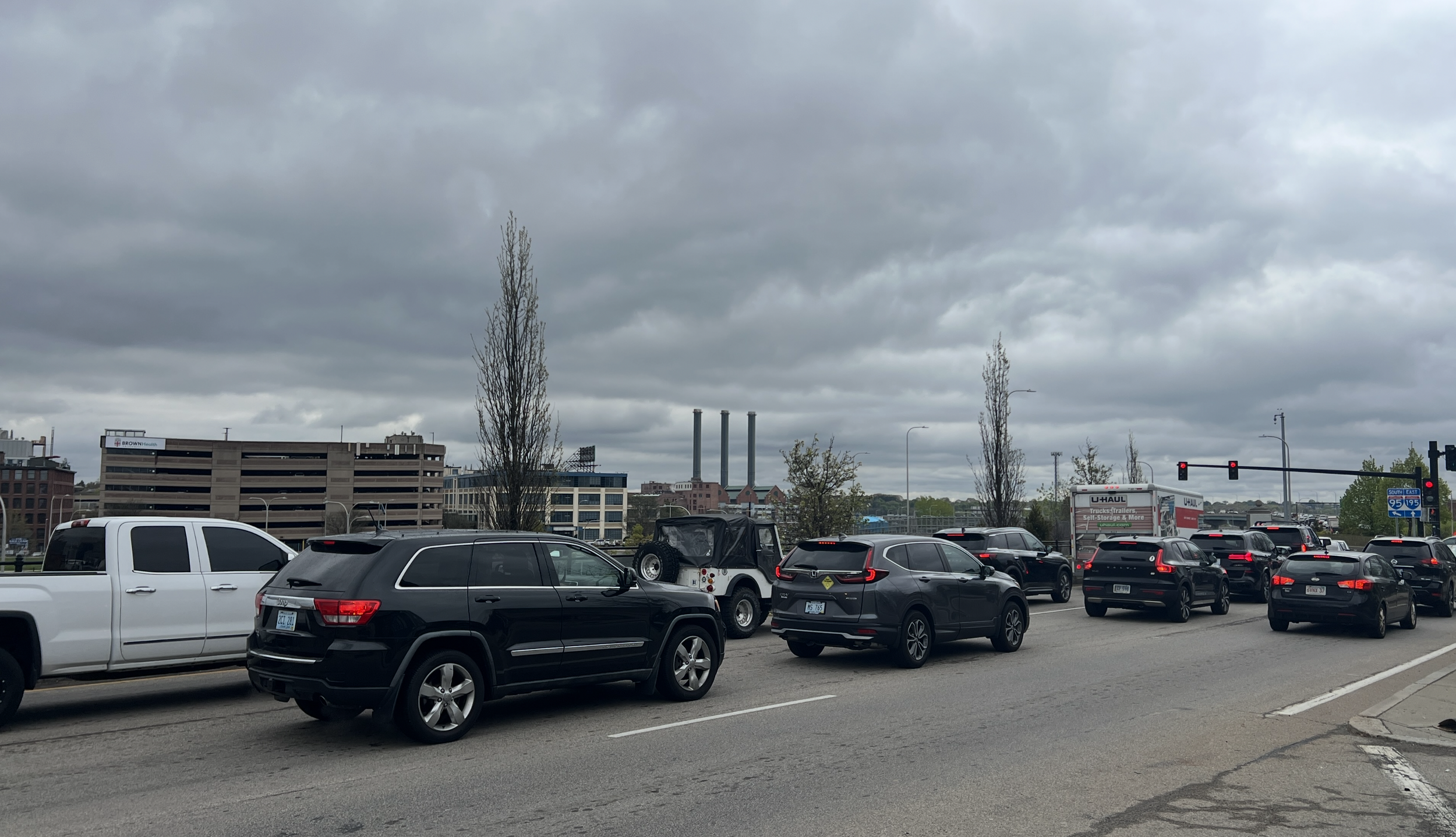
Clouds converge over the Providence skyline along Interstate 95 in April 2026, where many unhoused people set up encampments if they cannot find shelter at the nearby Crossroads. (Photo by Charlie Brewer)
How did this happen?
The United States has proven its ability to combat homelessness with federal funding. Rates of homelessness were on a steady decline when the federal government invested in affordable housing and healthcare benefits. Currently, our federal government has cut funding to healthcare and food programs, choosing instead to fund deportations, tax breaks for billionaires, and, potentially, a bulletproof ballroom.
Among other causes are the old standards: systemic racism and not-in-my-backyard-ism. People of color are getting priced out of homes they have lived in for years.
They’re often unable to afford a new place to live in their area: the average rent in Providence is over $2000 a month for a two bedroom. Lenders then refuse them loans, a discriminatory practice called redlining. When the government proposes new low-income housing, the neighborhoods often fight back, not wanting to see it in their backyards.
The biggest contributing factor is a shortage of affordable housing. According to the National Alliance to End Homelessness, there’s a deficit of 7 million affordable and available homes. Rent costs keep rising with inflation, but wages stay the same. People who work full time at minimum wage of $16 an hour make less than $3000 a month. They are unable to afford the lowest rents, let alone a down payment for a home.
This means that people all over the country have to choose between rent, food, and healthcare. And it is only getting worse: the National Alliance to End Homelessness reports that from 2022 to 2023, the number of households that are extremely cost-burdened - meaning they spend more than 30% of their income on housing - rose in almost half of the states in the country.
How is the community responding?
The people of Rhode Island have risen up with force. Nonprofits, local governments and citizens alike are working on the problem. They’re advocating for more services for the unhoused, from building more housing units to pushing for policy change like rent stabilization.
Crossroads Rhode Island uses a housing first model: they prioritize moving people into permanent homes, then give them assistance and education to keep their homes. Between 2020 and 2024, there was an almost 400% increase in people who were unhoused and unsheltered.
According to their 2024 Annual Report, Crossroads served more people than ever, helping over 2500 people permanently end their homelessness. “...decades of underinvestment have led to a critical shortage of housing in Rhode Island and rents have skyrocketed since the pandemic. There simply are not enough apartments that people with very low incomes can afford,” the report says.
House of Hope, a Community Development Organization, has opened up ECHO (Emergency COVID Housing Opportunities) Village in response to the heightened need due to COVID. The village, opened in early 2025, features rapidly-deployable units that allow for immediate shelter, on-site support like education and case management, and community.
The Rhode Island Homeless Advocacy Project emphasizes community and humanization. Once a person is homeless, Hirsch said, most people perceive that their situation is their own fault, rather than blaming inflation and high real estate costs. As a result, people pass over them. The Advocacy Project meets weekly at Mathewson Street Church to amplify the voices of unhoused people and make lasting change in policy and stigma.“The only reason so many people are outside is because they’ve been dehumanized,” said Hirsch in an interview.
For those facing homelessness in Providence, there’s a small ray of hope. In April, the City Council passed a rent stabilization ordinance that would regulate rent hikes to 4% every year. It also provides a rent board where tenants and landlords can file complaints, apply for rent increases, and more.
“Displacement and eviction goes down with rent stabilization, which reduces homelessness,” Hirsch said.
Providence Mayor Brett Smiley vetoed the measure on April 17, citing in a letter to the Council that it “isn’t a solution that’s proven to work, or built to last.”
Hirsch disagreed.
It “costs more to leave people in the street than it does to provide them with housing,” he said. The Council needs 10 supporting votes by May 17 to override Smiley’s veto.
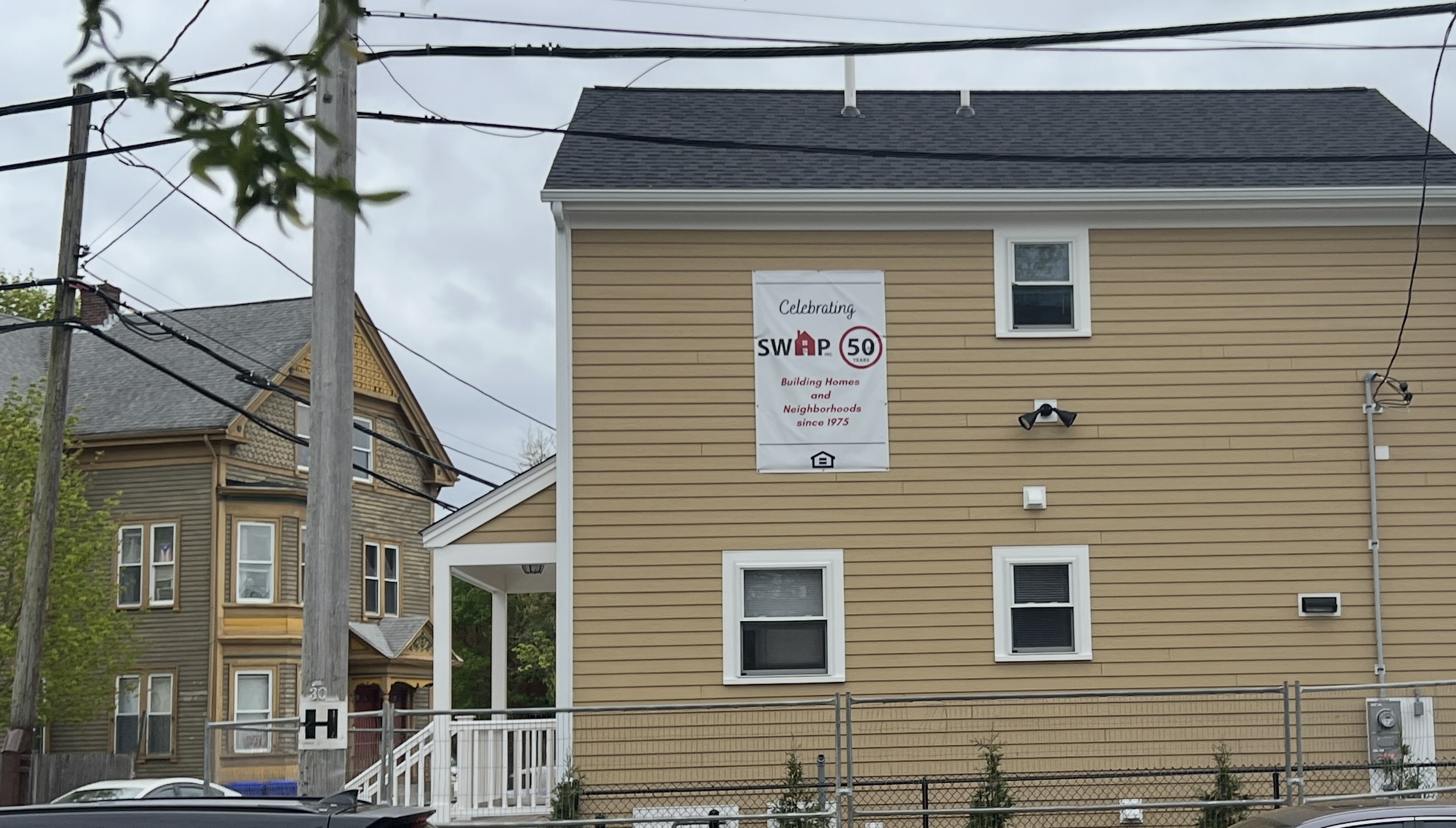
A banner on a refurbished building in Providence celebrates the 50th anniversary of SWAP (Stop Wasting Abandoned Property), a nonprofit development organization dedicated to revitalizing unoccupied homes and providing affordable housing. (Photo by Charlie Brewer)
What can I do?
Faced with realities as harsh as these, it is easy to lose hope - especially when one takes into account that every issue, from racism to unlivable wages, are all interconnected. But advocates recommend small but powerful actions to support the unhoused community.
Help yourself first: do your research. What rights do you have as a tenant in your state? In your city? How can you get an affordable mortgage rate?
Support organizations like Crossroads and the House of Hope with donations and volunteering your time. These organizations often have upcoming events and lists of things they need on their websites. Financial support allows them to pay their staff and expand their resources. Spending time with the guests at those organizations provides human connection, allowing them to feel closer to the people around them and themselves.
Help unhoused individuals directly. Advocate for them to the people in your life. If you drive by someone asking for help, see what you can do. Communities thrive when they care for one another.
